
Branding Guide and Kit
Aug 20, 2023
Why Branding Matters
Branding is more than just a logo and a catchy tagline. It's the perception people have of your business, and it plays a pivotal role in influencing their decisions. A strong brand can:
Build Trust: A consistent brand identity fosters trust and reliability. Customers are more likely to choose a brand they recognize and trust.
Differentiate from Competitors: In a crowded marketplace, branding sets you apart from competitors. It tells your unique story and values.
Increase Value: A well-established brand can command higher prices for products or services. People are willing to pay more for brands they perceive as high-quality.
Foster Loyalty: When customers connect with your brand emotionally, they become loyal advocates who promote your business.
Now that we understand why branding matters, let's dive into creating a compelling brand identity.
Elements of a Strong Brand Identity
1. Logo: Your Visual Anchor
Your logo is the face of your brand. It should be memorable, versatile, and convey your brand's essence. Whether you're designing a new logo or refining an existing one, ensure it's unique and instantly recognizable.
2. Color Palette: Setting the Mood
Colors evoke emotions and convey meaning. Choose a color palette that aligns with your brand's personality and resonates with your target audience. Consistency in color usage across all brand materials is key.
3. Typography: The Art of Letters
Fonts can communicate a lot about your brand's style. Select fonts that complement your logo and reflect your brand's personality. Stick to a few fonts for consistency.
4. Brand Voice: The Way You Speak
Your brand should have a distinct voice and tone that reflect its personality. Are you formal and professional or friendly and approachable? Define your brand's voice and use it consistently in all communication.
5. Messaging: Tell Your Story
Craft a compelling brand story and messaging that connects with your audience. Your messaging should clearly convey what you do, why you do it, and how it benefits your customers.
6. Visual Elements: Beyond the Logo
Apart from the logo, consider other visual elements like icons, illustrations, and imagery that reinforce your brand's identity.
7. Branding Guidelines: Keeping it Consistent
Document your branding guidelines in a brand style guide. This guide should detail how to use all brand elements consistently across various media and materials.
Creating Your Branding Kit
Now that you have a better understanding of the essential elements of a strong brand identity, it's time to create your branding kit. A branding kit is a collection of all the assets and guidelines needed to maintain a consistent brand identity. Here's what you should include:
Logo Variations: Include different versions of your logo (color, black and white, and grayscale) in various formats (vector, PNG, JPEG).
Color Palette: Provide color codes (hex, RGB, CMYK) for all brand colors along with their usage guidelines.
Typography: Specify the fonts used in your branding, including variations for headlines, subheadings, and body text.
Brand Voice Guidelines: Describe your brand's voice and tone, and provide examples of how to use it in different contexts.
Messaging: Include your brand story, mission statement, and key messaging points.
Visual Elements: Add any additional visual assets like icons, patterns, or illustrations.
Branding Guidelines: Compile all the above elements into a comprehensive guide that explains how to use your branding assets consistently.
Your Free Branding Kit Template
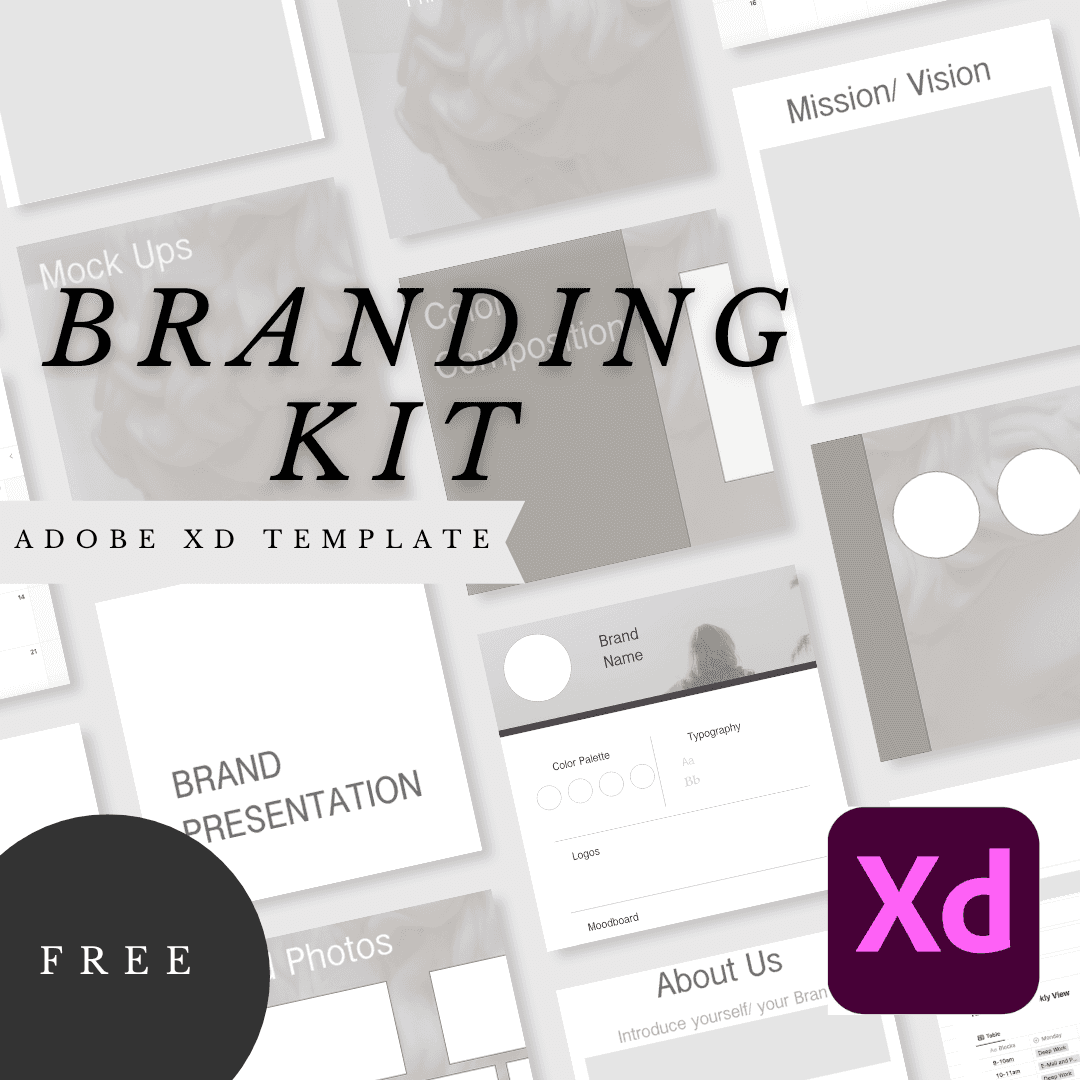
To make your branding journey even easier, we've created a free Adobe template for your branding kit. This template includes placeholders for all the elements discussed above, making it simple for you to fill in your brand's details. Click here to download the template.